Built for performance. Designed with responsibility.
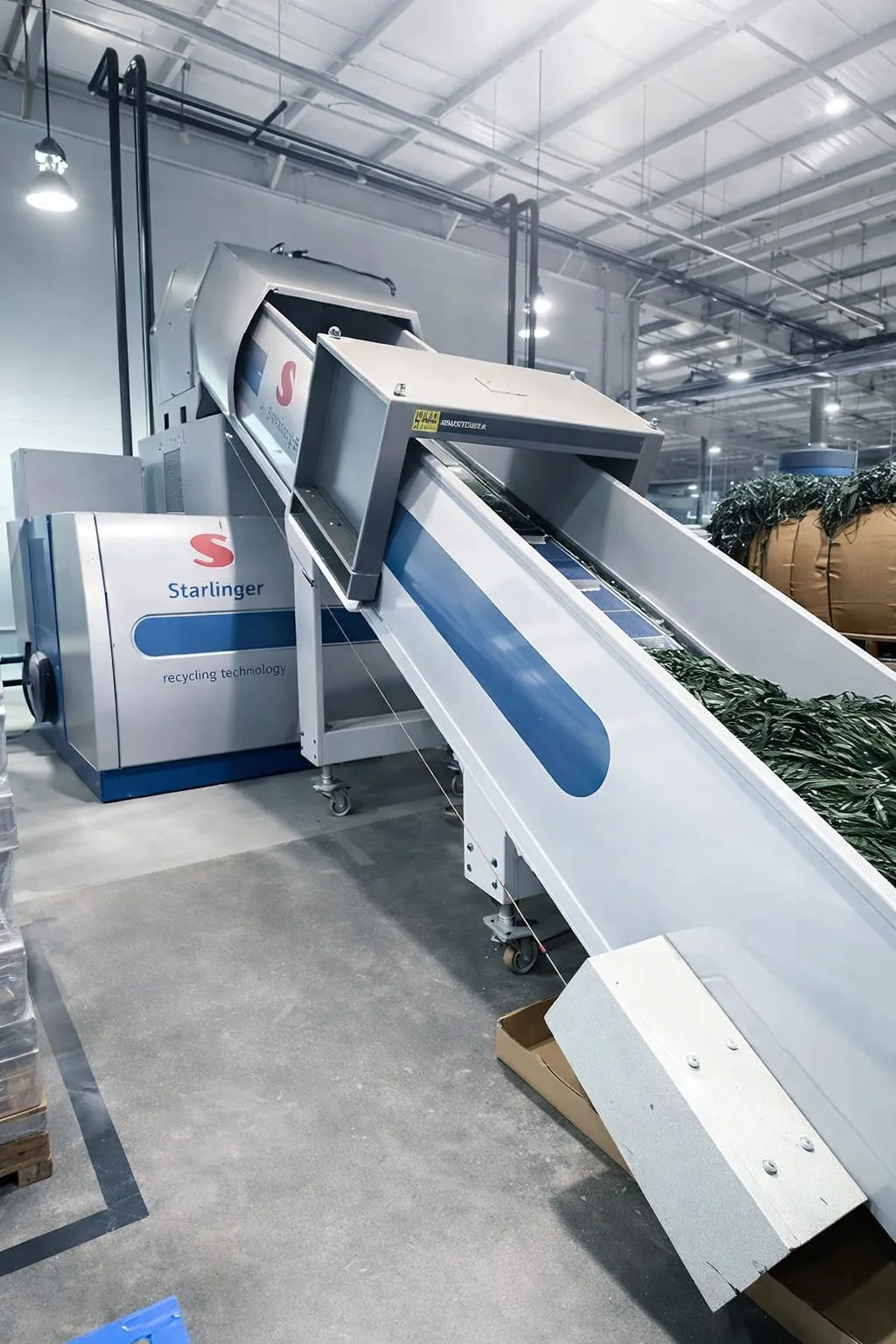
Sustainability inside a turf factory is not a marketing claim. It is a process: own the line, control the inputs, take back the outputs. Sprinturf operates the only on-site recycling and reclamation equipment in the synthetic turf industry. The same plant that extrudes the fiber takes the field back when it retires. Three steps. One company. One closed loop.
Dadeville, AL · Recycling line
Sustainability in numbers
12-14Average field lifeYears in service. Beats the published warranty by an average of four years.
0Fiber failures since 2010Validated across the entire 16-year warranty cohort.
OnlyOn-site recyclingSprinturf operates the only on-site reclamation equipment in the synthetic turf industry.
−35°FNaturalCool surface dropUp to 35F lower surface temperature on hot days vs. conventional infill systems.
Three pillars
Recycle the field. Reduce the heat. Re-think the infill.
Three places where the spec choice you make on day one shapes the environmental profile for the next twelve years.
01
On-site recycling
Take the field back at end of life.
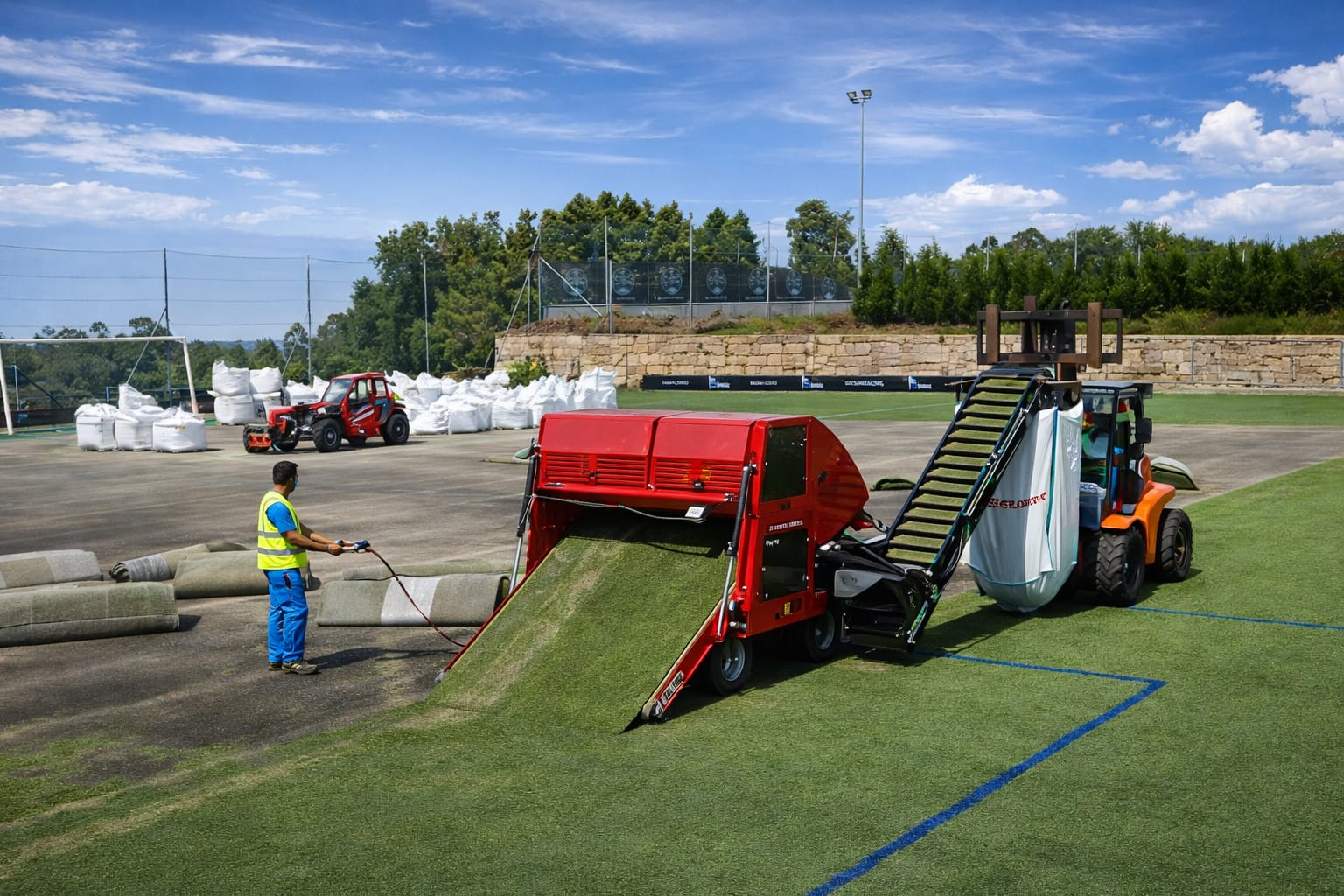
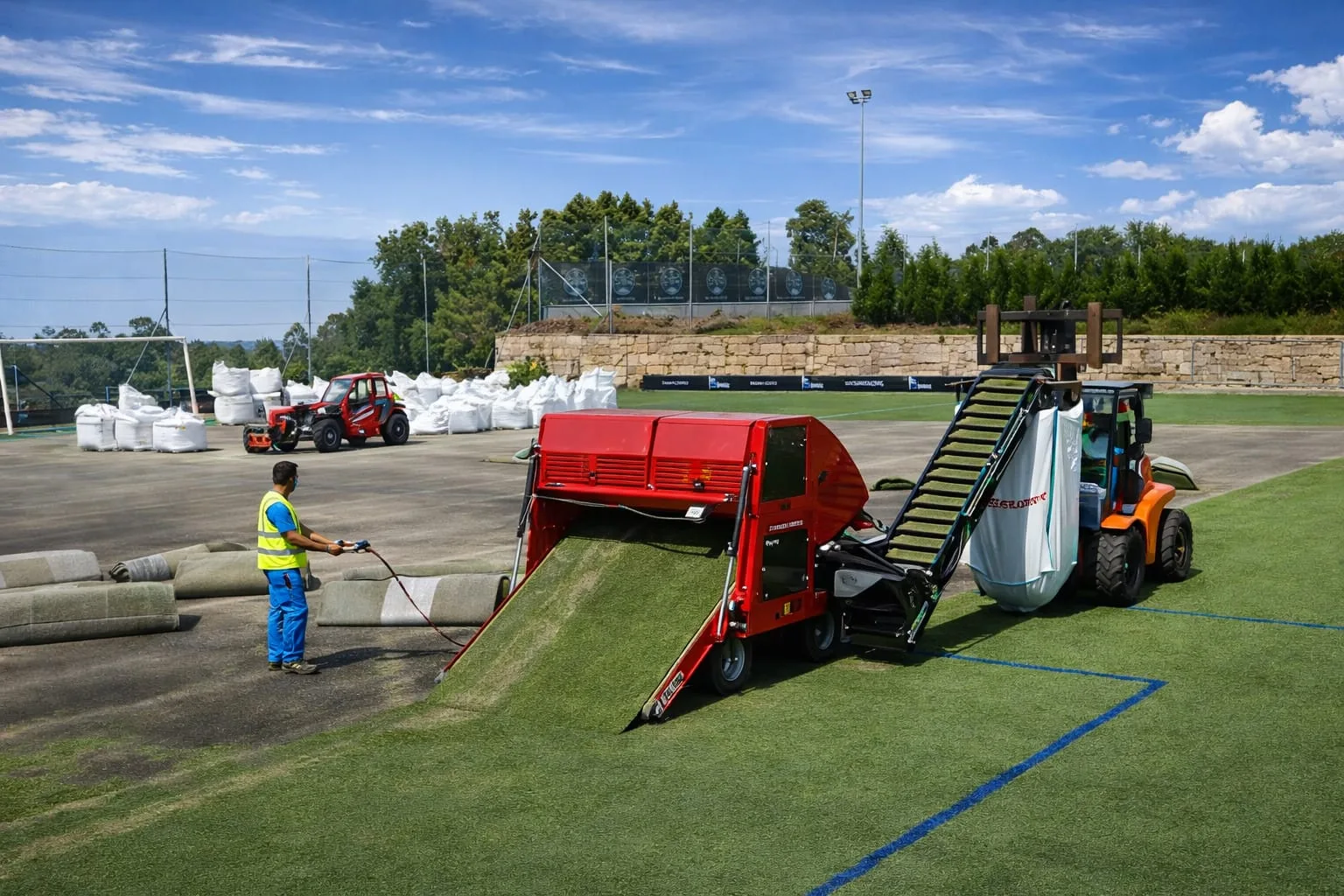
End-of-life fields are processed at the Dadeville facility into reclaimed material that re-enters the supply chain. Nothing leaves the property as landfill if it can run back through our own line. Most of our competitors ship retired fields to a third-party reclaimer, or worse, to a landfill at the back of the parking lot.
OnlyOn-site reclamation in the industry
02
Bio-based infill
GreenPlay organic, since 2006.
GreenPlay is a proven bio-based organic infill that lets synthetic turf look, feel, and perform like natural grass. NaturalCool is 100% naturally processed, chemical-free coconut coir fiber, the only non-granular infill on the market. Both are fully recyclable and biodegradable at end of life. Both are options on every Sprinturf system.
100%Recyclable + biodegradable
03
Heat mitigation
NaturalCool drops surface temp 35F.
NaturalCool absorbs moisture from the air and cools the playing surface through evaporative effect. No watering required. The result is a measurable drop of up to 35 degrees Fahrenheit in surface temperature on hot summer afternoons, measured against conventional infill systems. The cooler surface protects the field, the infill, and the players who use them.
No waterRequired for the cooling effect
A vertically integrated philosophy
Own the line. Take the field back.
Sustainability is not what you put on the cover of a brochure. It is what you do at the plant when the line is running.
We extrude polyethylene at our line in Dadeville. We tuft and coat at our plant in Chatsworth. And when a field reaches end of life, the same Dadeville plant runs it back through reclamation equipment we built and operate ourselves. Reclaimed material re-enters the supply chain. The loop closes inside the building.
The bio-based GreenPlay organic infill we offer has been on the market since 2006. The NaturalCool coconut coir fiber infill cools the surface up to 35 degrees Fahrenheit without irrigation. Our ISO 9001:2015-certified Chatsworth plant runs continuous QC monitoring on every roll that ships. None of these are claims we made up to chase a procurement checkbox. They are decisions we made because we own the line and can change it.
ISO 9001:2015Chatsworth plant certified for tufting and coating quality management.
16-year cohortZero fiber failures since 2010, across every climate Sprinturf has shipped to.
Greenplay organicBio-based infill on the market continuously since 2006.
NaturalCoolThe only non-granular cooling infill in the synthetic turf market.
Community
Reinvested, not just shipped.
Two programs put margin back into the communities the fields go into.
2026 LEAP Grant Program
Funding fields where the bond will not reach.
The Sprinturf LEAP Grant program supports under-resourced school districts and parks departments that cannot quite get to a full bond. Awards range from a single batting cage net to a full multi-sport field replacement, depending on need.
~$500KDistributed in 2026 across 12 projects in 8 states.
Healthy Spaces Council
Where the people who plan fields actually meet.
Hosted in February 2026 in Chattanooga, the Healthy Spaces Council convenes athletic directors, parks directors, architects, and PlayCore brands to advance evidence-based community-recreation practice aligned with PlayCore's CORE framework.
Feb 2026Chattanooga, TN. Hosted by PlayCore + Sprinturf.
Frequently asked
The questions a procurement officer actually asks.
How does Sprinturf handle end-of-life fields?
Sprinturf operates the only on-site recycling and reclamation equipment in the synthetic turf industry. End-of-life fields are processed at the Dadeville facility into reclaimed material that re-enters the supply chain.
The goal is for nothing to leave the property as landfill if it can run back through our own line. Reclaimed polyethylene goes back into the resin stream. Backing material is sized for downstream use. Field-recovery scope and pricing are quoted on a per-project basis.
What about PFAS in synthetic turf?
Sprinturf does not intentionally add PFAS compounds to its turf systems. Our polyethylene fiber, polyurethane backing, and bio-based GreenPlay and NaturalCool infills are formulated for performance and durability without intentional PFAS use.
Independent third-party test reports are available for any project on request as part of the Sprinturf submittal package. We will share what we measured and how we measured it.
Do Sprinturf systems contain lead or heavy metals?
Sprinturf turf systems comply with the consumer-products lead-content limits established by the Consumer Product Safety Commission. Independent third-party test reports for lead and heavy-metal content are part of every project submittal package on request.
If a district has a stricter local limit, we will provide test data against that limit before the contract is signed.
How long does a Sprinturf field actually last?
Average field life ranges from 12 to 14 years in service, with the standard published warranty at 8 years and the extreme-cycle warranty at 10. Sprinturf has logged zero fiber failures across the full 16-year warranty cohort since 2010.
The biggest single variable in field life is the maintenance program. Sprinturf provides a maintenance schedule and trains site staff at handoff.
Is the warranty aligned with the sustainability claims?
Yes. The same vertical integration that lets us recycle a field at end of life is the reason we can stand behind the warranty without hiding behind a holding company.
One company extrudes the fiber, tufts the roll, coats the backing, and supervises the install. When a sustainability question shows up, the engineer who chose the resin can answer it. We do not have to call Antwerp or Seoul.
What about microplastic shed?
For projects where microplastic concerns drive the spec, we recommend the bio-based GreenPlay organic infill (cork and coconut blend) or NaturalCool coconut coir. Both are fully recyclable and biodegradable.
Field perimeter containment, brush programs, and end-of-life reclamation through Sprinturf's own line further reduce the microplastic exposure profile of the system. Specifics vary by climate and site geometry; we will quote a containment plan with the system spec.
Want the third-party test data?
A Sprinturf rep will respond within one business day with the submittal package: PFAS-test report, lead and heavy-metal report, end-of-life recovery scope, and the recommended infill profile for your district.