Services
From breaking ground to year ten.
A Sprinturf field starts with a soil sample and a stadium drawing. It runs through extrusion in Dadeville, tufting in Chatsworth, and an install crew on your campus. Then SprintCare keeps it under warranty until replacement, eight to fourteen years later. Same factory. Same crew. Same phone number.

Design-Build
Single-source from soil sample to opening kickoff. We handle site evaluation, system spec, manufacture, install, and warranty in one contract with one regional rep.
See design-build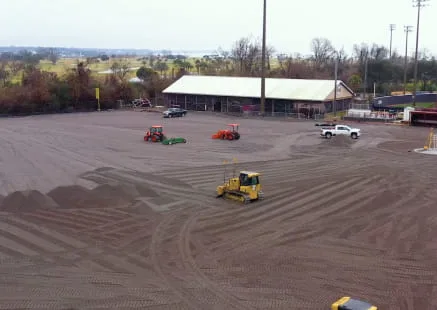
Replacement
For owners with a field that's eight to twelve years old. Turf removal, base inspection, and a new system on your existing footprint. Most projects close in offseason.
See replacement
SprintCare
Annual Gmax testing, quarterly grooming, and an eight-year refresh program. Built to extend field life by two to four years and protect the warranty in writing.
See SprintCare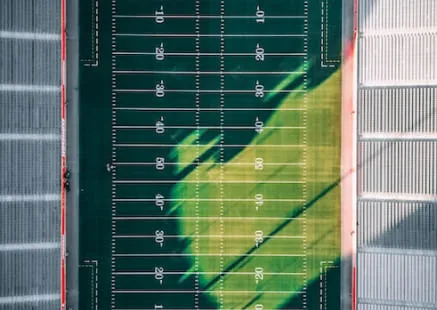
LEAP Grant
A $500,000 annual grant program for under-resourced school districts and parks departments. Twelve community projects in 2026, distributed across eight states.
See LEAP GrantBy the numbers
Sprinturf services proof points
The Sprinturf lifecycle
One field, four chapters.
Plan, build, maintain, renew. The same factory and the same regional rep stay on the project from the first phone call to the second-generation replacement, ten or twelve years later.
-
01 / Plan
Site evaluation, system spec, scope of work.
A regional rep walks the site, pulls drainage and base condition, and pairs you with the right system for the level of play. Predator for elite cleat traffic, UltraBlade for NFHS programs, GrandSlam for baseball, Sharkstooth for indoor. The proposal lands within one business day of a site visit.
Outcome: a project-specific spec, three comparable case studies, and a line-item budget your business office can take to the board. -
02 / Build
Manufacture, deliver, install, punch list.
Fiber extrudes in Dadeville, Alabama. Backing tufts and coats in Chatsworth, Georgia. Trucks ship to your campus. The Sprinturf install crew handles seam welding, infill, paint, and punch list. Field-ready timeline averages 90 days for replacements and 120 to 150 for new builds, weather permitting.
Outcome: a finished field with documented Gmax test results and an 8-year limited warranty in writing, signed before the crew leaves. -
03 / Maintain
SprintCare protects the warranty.
Quarterly grooming and decompaction, an annual Gmax test, daily monitoring on schedule, and warranty enforcement in writing. Most fields on SprintCare run two to four years longer than fields without a structured maintenance plan, and the resale numbers when a district replaces them reflect that.
Outcome: field life that beats the warranty by 4 to 6 years and Gmax numbers that hold under 165 the whole way. -
04 / Renew
Replacement, refurbishment, or LEAP Grant.
Around year 10 to 14, every synthetic field needs a new top layer. Sprinturf removes the old turf, inspects the base, and reinstalls a current-spec system on the existing footprint. For under-resourced districts that can't carry the capital, the LEAP Grant program covers a portion of the cost on twelve community projects every year.
Outcome: a second-generation field that takes the program through the next decade. Same regional rep. Same warranty. Same phone number.
One project, one rep
Tell us where you are in the lifecycle.
New build, scheduled replacement, lapsed maintenance, or a LEAP Grant inquiry. A regional Sprinturf rep responds within one business day with a project-specific spec, three comparable case studies, and a line-item budget you can carry to your board.