01 / The story
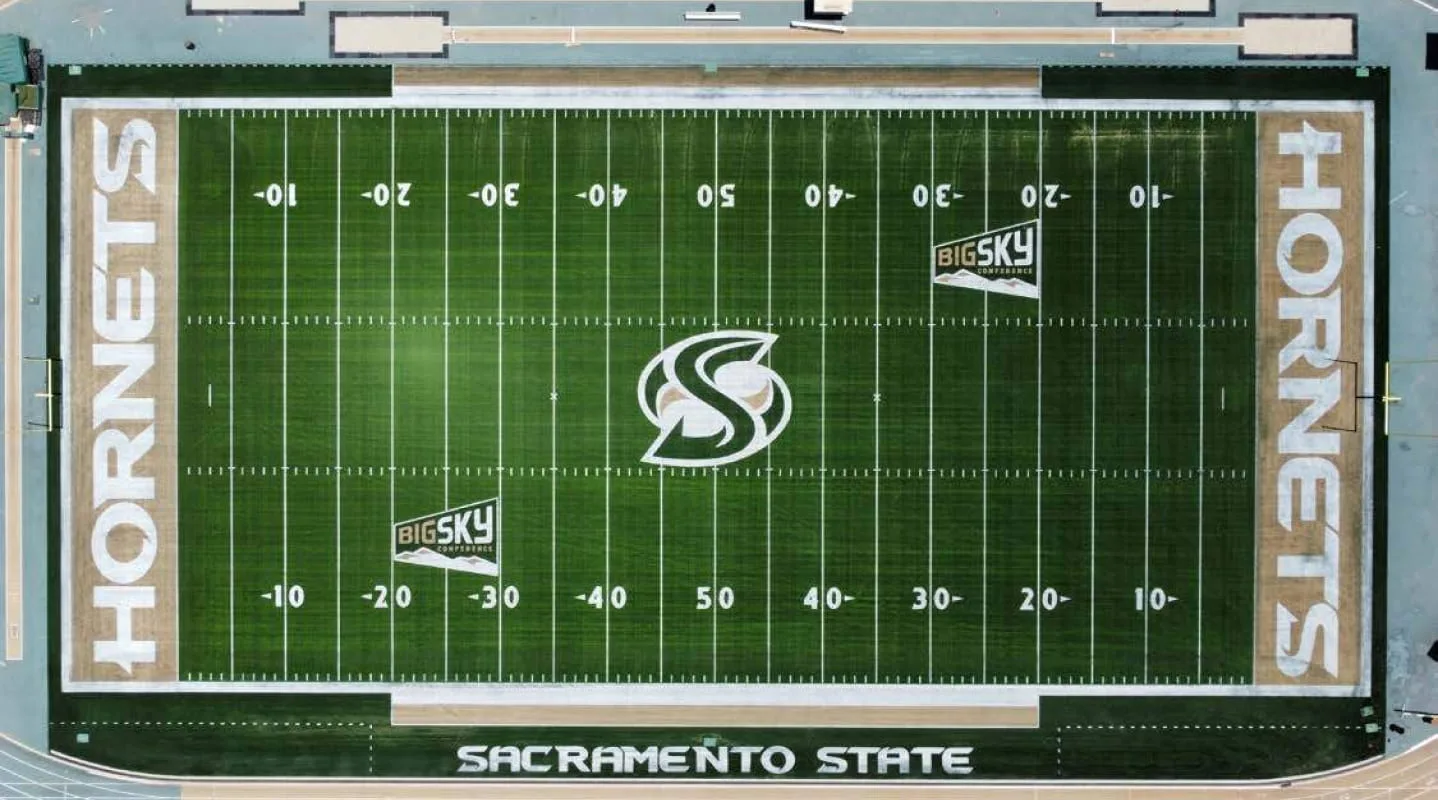
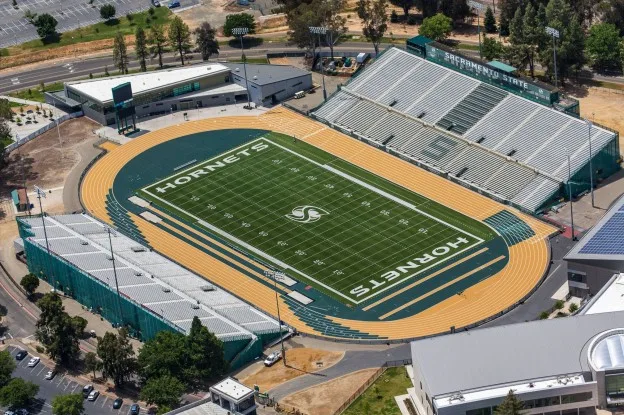
Sacramento State plays in the Big Sky Conference. The athletic department doesn't draw the broadcast revenue of an SEC program, but Hornet Stadium gets the same wear: spring football, summer 7-on-7, a full game season, plus marching band, soccer overflow, and stadium events. The job in 2021 was straightforward. Replace an eleven-year-old surface with something that looked, played, and lasted like a tier-one field.
A field with a long history.
Hornet Stadium opened in 1969 and has been a fixture of Sacramento athletics for more than half a century. Before this 2021 project, the venue carried natural grass for forty-one years, then transitioned to synthetic turf in 2010. The 2010 surface had also hosted U.S. Olympic Trials events earlier in the venue's life. By 2021, that synthetic was due, and the program needed a system that would handle a wide-traffic football schedule plus the stadium's secondary uses without showing wear in year three or four.
Why Predator.
Sacramento State selected the Predator dual-fiber turf system because it offered three things the program prioritized: appearance and feel close to natural grass, increased player safety through engineered Gmax targets [verify with rep], and a cooler playing surface during Sacramento's long summer months. Predator pairs Sprinturf's proprietary Apex monofilament fibers with SharkTooth slit-film fibers. The monofilament features a ribbed diamond-shape design that enhances fiber memory and prevents fraying under cleat traffic. The two fibers measure 380 and 140 microns respectively [verify with rep], the thickest pairing Sprinturf produces.
Install.
North Star Construction collaborated with Sprinturf on the field replacement. The job moved on a tight calendar because the program needed the field game-ready for the start of the 2021 football season. It was. The Hornets played their season opener on the new Predator surface on September 11, 2021, against Northern Iowa University, with the game broadcast on ESPN+. The field has carried the program through every home Saturday since.
Hornet Stadium spec sheet
- System
- Predator dual-fiber
- Primary fiber
- Apex monofilament, 380 micron
- Secondary fiber
- SharkTooth slit-film, 140 micron
- Pile height
- 2.5 inches
- Face weight
- 44 oz/yd²
- Gmax target
- <165 (ASTM F355)
- Backing
- Dual-layer urethane-coated polyester
- Warranty
- 8-year limited
- Country of manufacture
- United States
- Install partner
- North Star Construction
A platform Sprinturf has scaled.
Hornet Stadium was an early reference build for the Predator platform. Since its 2020 introduction, Predator has been adopted by schools, universities, and recreation departments across the country, including installs at Reitz Bowl and Central Stadium in Evansville, Indiana, and a growing list of high school and college programs. The system is what Sprinturf now points NCAA programs toward when they want SEC-grade fiber on a non-SEC budget.